It’s not an easy task to draw the chronology for civilization which did not use writing. However thanks to archaeology, linguistics and oral tradition, we can reconstruct a global chronology for the Kitara civilization from the ancient times to our days :
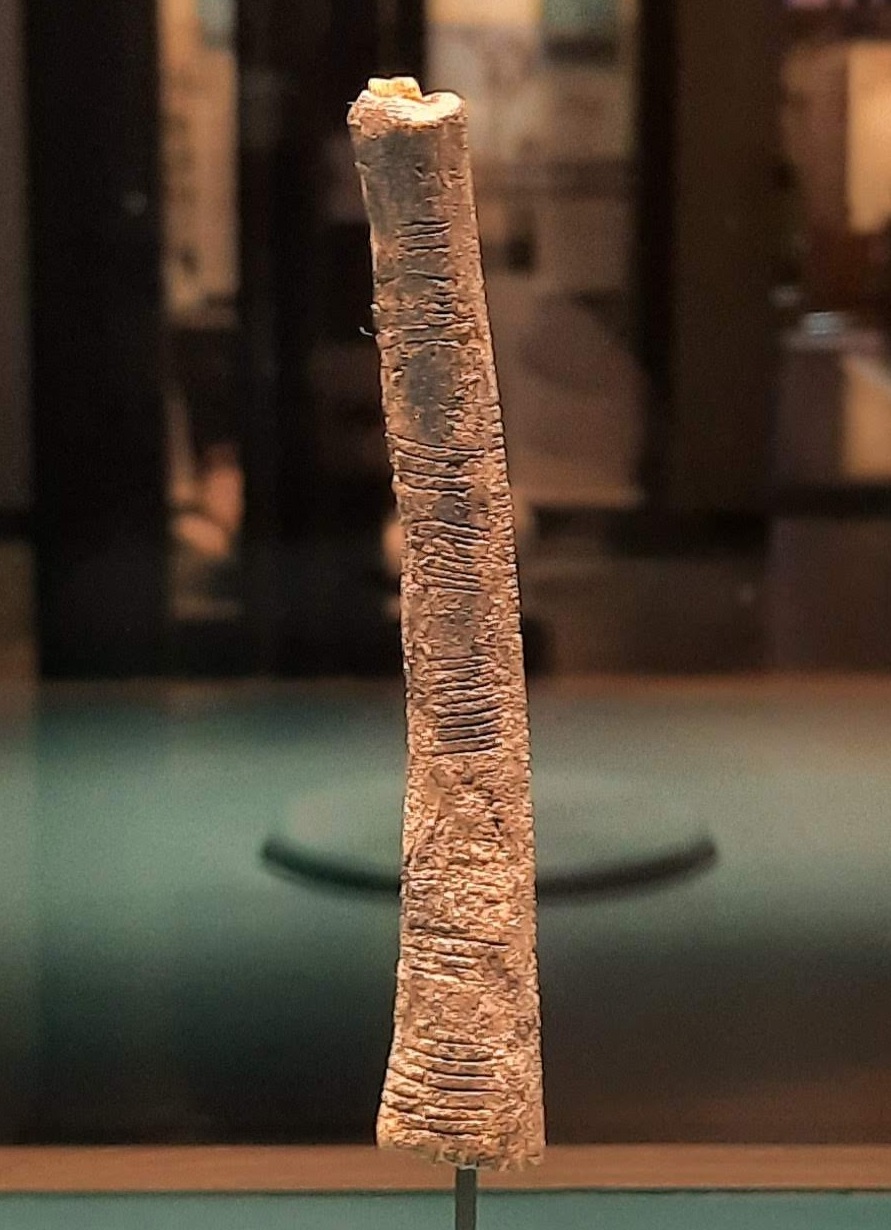
- 20 000 BCE : Ishango bone. The Ishango bone is a prehistorical counting stick discovered around the shores fo the Lake Rweru and the Semiliki river. This artefact might be the creation of a community of hunter-gatherers.
- 6000 BCE : Kansyore ceramics. Several thousands ago, the shores of the East African Lakes were inhabited by communities of hunter-gatherers and fishermen. These people created the most ancient ceramics in the region.
- 3000 BCE : Nderit Culture (also known as Savannah Pastoral Neolithic). This culture show the first element of animal husbandry (cattle, sheep, goat, chicken..) and is located in an area spreading from the shores of Lake Turkana down to the central Highlands of Kenya and the Mount Kilimandjaro in Tanzania. Even if this culture concern an area not specifcally in the Kitara region, this is the first testimony of pastoral economy in East Africa and this culture will be closely related to the Kitara civilization.
- 2020 BCE : Muganza iron artefacts. At Muganza (Rwanda) and in Burundi, we found the tracks of the first metallic objects in the region.
- 700 BCE – 600CE : Urewe culture, the first Iron age : the Great Lakes region is covered by a common material culture, based on agro-pastoral activities (sorghum, cattle), trade with the Indian coast, and a highly developped iron metallurgy.
- 600 CE – à 1400 CE: A new era (archaeologists call it the Second Iron Age), starts with a different metallurgic tradition from Urewe culture, which might be a sign of new communities and clans in the region.
- 1000 CE : Reign of the Bacwezi : Apex of the Kitara Empire.
- Around 1400 CE : Reign of Ndahura (also called Ndahiro in some traditions), the Kitara Empire reach its greatest extension and influence, from Northern Uganda to Rwanda, and from Eastern Congo to Northwestern Tanzania.
- Around 1450 CE : Collapse of the Empire, a series of catastrophes (famine, cattle disease, invasions, civil war and epidemics) – called NyaRubanga in Luo language – occured, causing the empire to crumble and the Cwezi dynasty to disappear.
- Around 1500 CE : On the ashes of the Empire, several smaller kingdoms emerge Bunyoro, Buganda, Ankole, Rwanda, Burundi…
- 1520 CE : The Biharwe Eclipse : a solar eclipse occured and is mentionned in several folktales of the region.
- Around 1600-1700 : the arrival of New World plants (manioc, beans, maize) cause an important population growth in the region.
- Around 1840 : the first Swahili traders arrive in the region.
- Around 1860 : the first European explorers arrive in the region.
- 1880-1900 : Beginning of the European colonization (Great Britain, Germany, Belgium).
- 1960-1965 : Decolonization process : Uganda, Tanganyika (then Tanzania), Kenya, Rwanda, Burundi, Democratic Republic of Congo became independant countries.
- 1959-1967 : Abolition of the traditionnal kingdoms.
- 1990s : Restoration of some of the traditional kingdoms (Buganda, Bunyoro…) in the region.
 Empire of Kitara
Leave a comment