The previous artices have demonstrated that the Bantu area was not empty before the supposed Bantu expansion and was inhabited since several millenias by a pre-bantu populations. But who are these pre-bantu people ?
When studying the questions of the populations inhabiting the Bantu area prior to the supposed Bantu expansion, the most name which usually appeared is the term “Abatwa” or local hunter-gatherers. Here are the main elements noticed regarding these populations.
Name :
They are called Abatwa by surrounding groups. But they usually have their own ethnonym : Akafula in Malawi, Bangweulu Batwa in Zambia…
Language :
They speak Bantu language and in all oral tradition, they are not remembered to have spoken a different language from the other groups. In the Great Lakes region, they are known to have a peculiar accent, more melodious than the rest of the population.
Way of life :
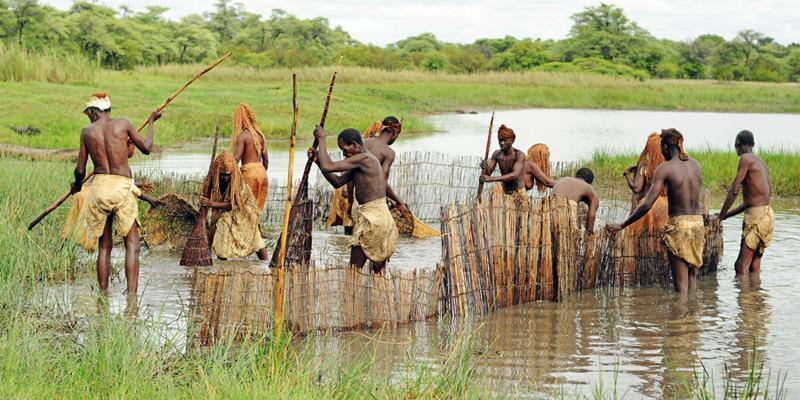
Vast majority of them have a nomadic hunter-gatherer lifestyle. In regions with lakes or swamps, they have also an important fishing tradition (such as the Bangweulu Twa in the image below). In the Great Lakes region, they are usually ceramists and specialised in this activity. Overall, they usually live in close economics symbiosis with the groups among which they are scattered, providing products of their hunting and fishing activities.
Physical description :
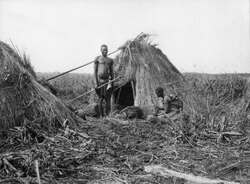
Most of studies and oral tradition describes them with a dark skin, usually with a shorter height than their neighbors but not as short as the Pygmy groups of the Congo forest.
A missionnary, visiting the Southern Twa inhabiting the south of Angola gave the following observation : “The southern Twa today live in close economic symbiosis with the tribes among which they are scattered—Ngambwe, Havakona, Zimba and Himba. None of the individuals I have observed differs physically from the neighboring Bantu.”
The Polish anthropologist Jan Czekanowski, when studying the Twa of Rwanda and Burundi, arrives to the same conclusion : the Twa are indistinguishable from the rest of the population, except through a slightly shorter average height, and should not be confused with the Pygmy population of the Congo forest.
Finally, besides a slight shorter stature on average – which can be easily explained by different lifestyle and diet – the Abatwa and other Bantu populations are indistinguishable in terms of physical description.
Oral tradition :
In all the southern savannah area, the Abatwa are unanimously recognized as the first habitants of the soil, and have usually no tradition of coming from elsewhere. This align with archaeological results which consider that the first inhabitants of the area were nomadic hunter-gatherers.
All these informations put together, the most logical solution is that the pre-Bantu populations were these Abatwa groups, which had a nomadic hunter-gather way of life, spoke Bantu language and had Bantu customs. At some times of their history, some groups among the Abatwa adopted agriculture (or pastoralism) and a sedentary lifestyle and became what we call now Bantu people through cultural transformation.
The pre-Bantu population inhabiting the Bantu area were hunter-gatherers called Abatwa. They spoke Bantu language, shared Bantu customs, and their oral tradition present them as the indigenous people of the land. The only difference between Batwa and Bantu is their way of life : Batwa are hunter-gatherers while Bantu are usually farmers. The way of life put aside, we understand that Bantu and Batwa are the same people, the Bantu being Abatwa who switched from hunting and gathering to agriculture. All in all, this implies that the pre-Bantu people were the Abatwa and are the ancestors of current Bantu populations.
With this article on the pre-Bantu population, we have now covered all the different chapters of the Bantu series and can now present the last article and conclusion of the Bantu series : a new proposal, the Nyika theory.


Leave a Reply