Disclaimer : this article presents an explanatory study on African history, based on current state of the scientific knowledge. It should not be taken as an authorative and final work. The author is not an academic historian nor specialist but proposes this study as a passionate of history. Thank you.
In this final article of the Bantu series, we will propose an alternative theory on the origin of Bantu people. The previous articles of this series have allowed us to present a list of questions regarding the common Bantu expansion theory and to determine the following points :
- How did the Bantu pass the Equatorial forest ? The hypothesis of Bantu people crossing the forest is very unlikely and Bantu people might have always lived in Subequatorial Africa.
- What is the original Pygmy language ? The original Pygmy language was most probably a Bantu language.
- Why no Bantu language north of the Equatorial forest ? There is very few Bantu languages north of the Congo forest, and the true Bantu homeland might be located south of the Equatorial forest.
- Where are found the most archaic Bantu languages ? The most archaic Bantu languages are found in Southeastern Congo and Zambia.
- Why no great migration story among most of Bantu people ? The oral history of most Bantu groups never talk about a great migration from Mount Cameroon towards all of subequatorial Africa. Instead these populations usually present themselves as indigenous to the land they currently inhabit.
- How did the Bantu dominate other group such as Cushites and Nilotes ? The Bantu never invaded East Africa and have always be present in the region, coexisting with the others groups like Nilotes, Cushitic, Central Sudanians, Hadza & Sandawe.
- Why no isolate language in most of Bantu area ? There is no isolate language in the Core Bantu Area, which indicate that this area have always be inhabited by Bantu people and is the point of origin of Bantu populations.
- Why no clear genetic proof of the Bantu theory ? There are no clear genetic marker for the Bantu expansion but there are many elements supporting evidence for an ancient presence of Bantu population in the subequatorial area.
- Who is responsible for the ancient prehistoric cultures in the Bantu area ? The prehistoric cultures and ancient material elements (rock art, lithic tools) of the subequatorial region are linked to nomadic hunter-gatherers known as Abatwa.
- Who were the pre-Bantu populations inhabiting the Bantu area and where are they now ? The groups inhabiting the Bantu area were hunter-gatherers known as Abatwa, who have the same culture, customs and even physical appearance as current Bantu populations. Abatwa and Bantu are the same population.
These answers lead us to another vision of the African past. An alternative hypothesis of Bantu people origin can be drawn, hypothesis that we can call the Nyika theory. But before to discuss this theory, we need first to have a short analysis on the geography of Africa.
The Southern savannah region :
The southern savannah region is a specific biome of Africa. The region is also known as the Zambezian subregion (in blue in the map below). The region is delimited by :
- The Central African rainforest in the Northwest
- The Great Lakes region in the Northeast
- The Atlantic Ocean in the West
- The Indian Ocean in the East
- The Namib and Kalahari deserts in the Southwest
- The Zambezi basin and Save river in the Southeast
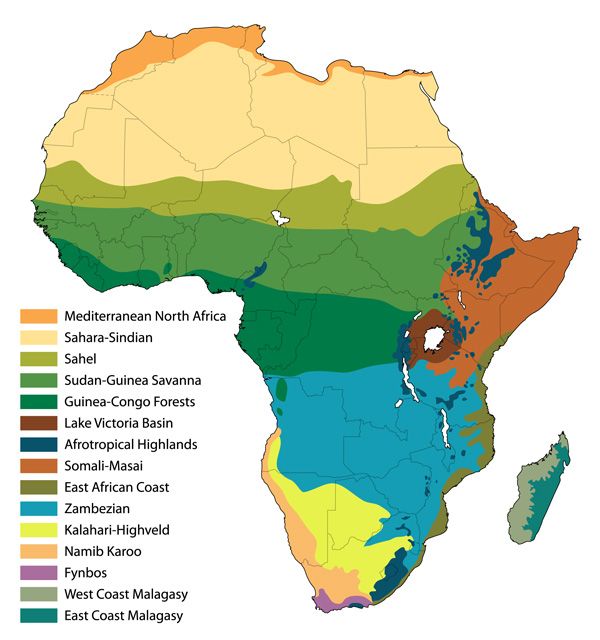
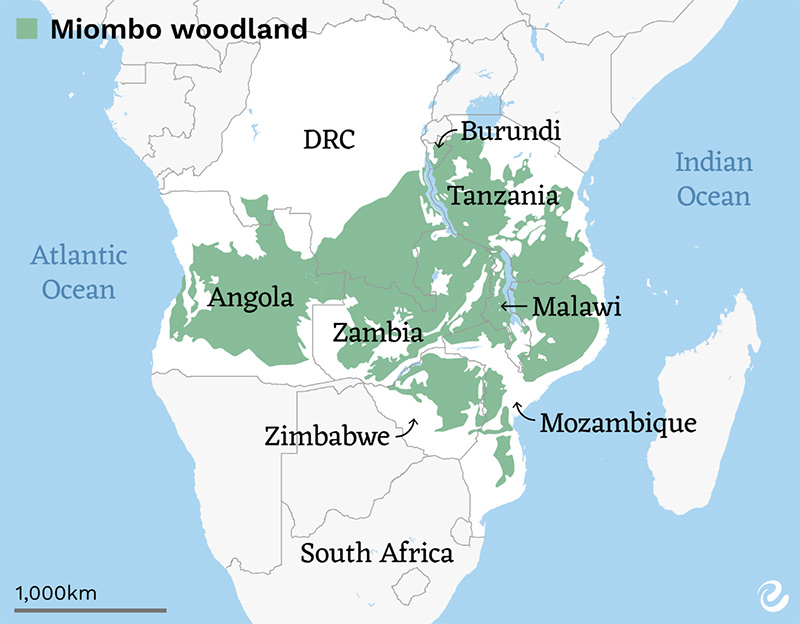
The region is a high plateau (above 1000 meters or 3000 feet) with tropical climate, several rivers (Congo, Zambezi, Okavango…), lakes (Malawi, Rweru, Upemba…) and marshlands. The fauna and flora are rich and diverse. The relatively high altitude limits the presence of mosquitos and parasites making the region very hospitable for human life. One of the particularity of the region is the Miombo (“miombo” being the Kiswahili term for wood, bush), a type of tropical woodland widespread in the area.
Who are the Banyika :
“Nyika” is a widespread word in many Bantu language such as Kiswahili or Shona where it means “land, country, region”. It’s also the name of some ethnic groups of Tanzania and Malawi, called Banyika or Banyiha (both spellings are correct). In one of the oldest book of East African litterature narrating African past, the Book of the Zanj, we found the information that the Bantu populations which inhabit the East African coast, are called Zanji or Kushur (Kaffir) in Arabic but their ethnic name in Kiswahili is Wanyika.
Thus, Nyika or Wanyika/Banyika/Abanyika is an ancient African name designating the African populations living on the East African coast and in the Miombo region. The name “AbaNyika “means : those who live in the land.
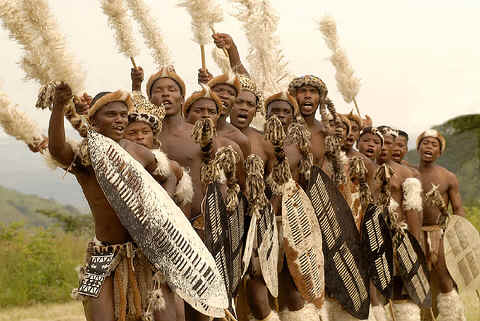
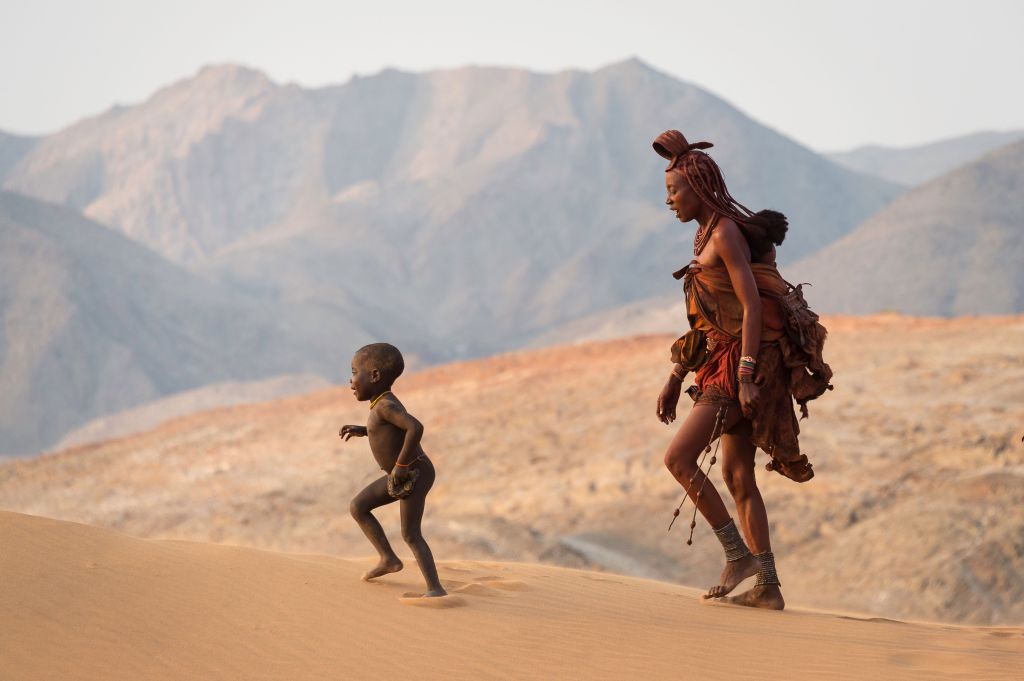
In this article, I will used the term Nyika/Banyika to refer to all Bantu speaking populations living south or east of the Congo rainforest such as the Kikuyu, the Shona, the Baganda, the Bakongo, The Himba, the Zulu, the Xhosa, the Chewa, the Luba…
History of the Banyika :
The Miombo or southern savannahs region is populated since at least the Middle Stone Age (100 000 BCE) by a group of populations which is named AbaNyika, meaning those who inhabit the land. Here are the main characteristics of the Banyika :
- They have lived as nomadic hunter-gatherers-fishers for dozens of millenias (some still do today) and are now mostly farmers or herders.
- They were the makers of the prehistoric cultures of Sangoan, Lupemban, Nachikufan characterized by specific lithic tools
- They were the makers of the Schematic Zone Rock art tradition
- They speak a set of closely-related languages, the Bantu languages
- They represent a coherent and homogeneous genetic group
- Starting around 1000 BCE, new clans have migrated from northern regions into the Nyika area. These new groups have contributed to implement the transition from hunter-gathering to agrarian and pastoral way of life among the BaNyika :
- Some clans have migrated from the Mount Cameroon region into the Kongo area, they have introduced palm wine and yam cultivation. These group have contributed to the birth of NorthWest and Western Bantu languages.
- Some clans have migrated from East Africa and the Nile Valley into the Great Lakes region and introduced cattle and sorghum. These group have contributed to the birth of Eastern Bantu languages.
- Even if these new groups brought significant innovations to the Banyika, their genetic influence has remained minimal. The Banyika remains mostly genetically, culturally and physically the descendants of the Middle Stone Age populations of the southern savannahs.
A summary of the Nyika theory :
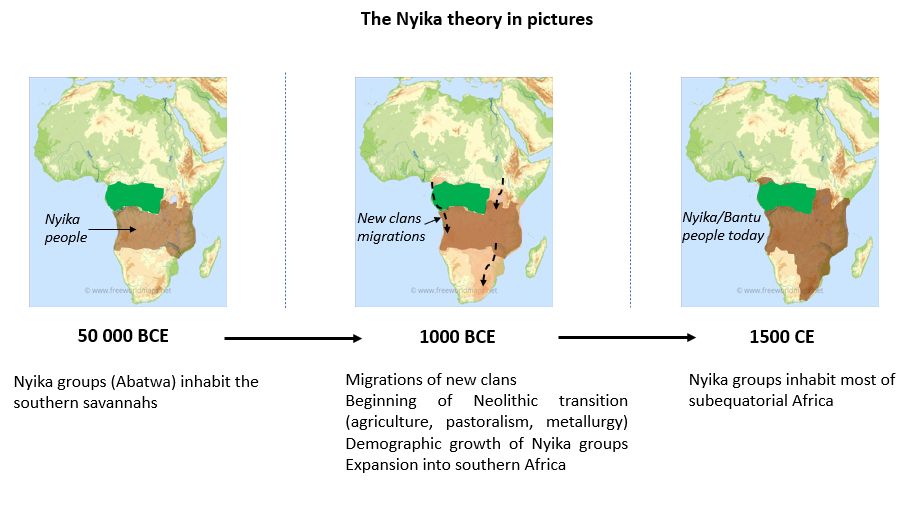
The Bantu people also known as Banyika are indigenous of the southern savannahs south of the equatorial forest. They are the descendants of local hunter-gatherers groups (Abatwa) and have lived in this region since at least 100 000 years, forming a coherent and homogeneous culture with their language (Bantu languages), customs, arts and social organization. Around 3000-2000 years ago, through technological innovations brought by incoming clans from West Africa and the Nile Valley, the Banyika start to live by agriculture or pastoralism. This leads to their demographic growth and expansion in new regions (Southern Africa, …) and their current presence in large parts of subequatorial Africa.


Leave a Reply