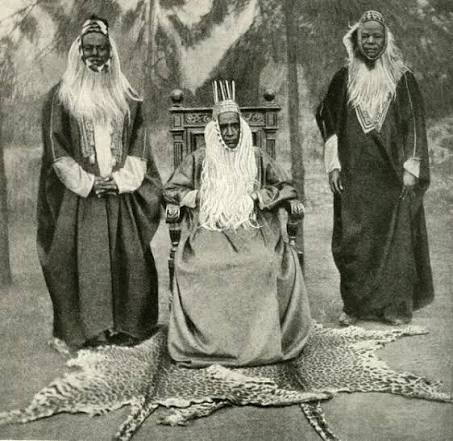
When the subject of Kitara history is adressed, a name always came back in the discussion : Cwezi. Oral accounts recall the Cwezi (or Abacwezi/Bacwezi) as the ruling dynasty of the Kitara empire during his most glorious period. However the traditions are scanty and unclear : who were the Bacwezi ? Gods, heroes, surnatural beings or simple humans ? We’ll try to answer that question in this article.
- Accounts and traditions about the Cwezi dynasty :
The Banyoro legends about the Cwezi empire :
The Banyoro are a people of Western Uganda inhabiting the kingdom of Bunyoro, they are considered the heirs of the Kitara empire. According to the book «Abakama ba Kitara» [1] written by the king of Bunyoro J.K. Nyakatura and published in 1933, the legend of the Abacwezi goes as follows :
Isaza was the King of Kitara from the Tembuzi dynasty, one day he received a message from a king called Nyamiyonga living south of its realm and asking him for an blood pact. Isaza is reluctant to do so, as he doesn’t know this king. Finally he consents to make an alliance with him. Isaza ally with Nyamiyonga by marrying his daughter Nyamata. A son, called Isimbwa, is born from their union. One day, Isaza goes to Nyamiyonga kingdom, but then disappear. During this time, his gatekeeper Bukuku, take the throne and rule the Kitara kindom. The chiefs of the country didn’t accept the rule of Bukuku as they consider as an usurper. Meanwhile in Nyamiyonga’s kingdom, Isaza’son Isimbwa, which is now an adult, decide to go to Kitara his father country to reclaim the throne. In Kitara, he marry the daughter of Bukuku, called Nyinamwiru ; their union give a son, called Ndahura. Ndahura, once adult, confronted and kill his grandfather Bukuku, and achieve to retake the Kitara throne, starting the Cwezi dynasty. Ndahura will reign for a long time and expand the empire through conquest. He will be suceeded first by his half-brother Mulindwa, and then by his son Wamara, the last Cwezi king.
| Isimbwa |
| Ndahura |
| Mulindwa |
| Wamara |
The Rwandan genealogy « Ubucurabwenge » :
In the list of the royal Genealogy of the Kingdom of Rwanda (Amasekuruza y’Abami), presented by Rwandan historian Alexis Kagame in his book “Inganji Karinga”[2] published in 1959, there are 7 kings prior to the first known Rwandan king Ruganzu Ndori, these kings are very similar to the kings mentionned in Nyoro tradition :
| Ruganzu Bwimba |
| Cyirima Rugwe |
| Kigeli Mukobanya |
| Mibambwe Sekarongoro |
| Yuhi Gahima |
| Ndahiro Cyamatare |
When Nyoro and Rwandan genealogies are put side by side, we see similiarities : Isimbwa seems to correspond to Ruganzu Bwimba of Rwandan genealogy, Mulindwa is presented as the haf-brother of Ndahura and as a regent during Ndahura absence, and thus not as a real king. Wamara is present in Rwandan oral tradition but only as a prince and bear the name Bamara.
An hypothetical harmonized list of the Cwezi kings would be :
| Ruganzu Bwimba |
| Cyirima Rugwe |
| Kigeli Mukobanya |
| Mibambwe Sekarongoro |
| Yuhi Gahima |
| Ndahiro Cyamatare |
| Mulindwa |
| Wamara |
Chronology of the Cwezi dynasty :
An estimation of the chronology of the Cwezi dynasty can be reconstruct based on the event of the Biharwe eclipse which occured on April 17th 1520. This event occured when 3 kings of the region faced each others in battle : these kings were Olimi of Bunyoro, Nakibinge of Buganda and Ntare of Ankole (Ntare Nyabugarobwera). This king Ntare of Ankole is presented in king list of Ankole as a descendant of Wamara. At the time of this battle, the Kitara empire had already collapsed and the new kingdoms and dynasties had sufficient time to consolidate. If we take a minimalist stance on the time elapsed, we can assume 2 generations (around 60 years) have occured between the collapse of the Kitara empire and the Biharwe battle. This would put the collapse of the Cwezi dynasty and the end of Wamara reign around 1450. And the chronology of the dynasty would be :
| Ruganzu Bwimba | Circa 1250-1290 |
| Cyirima Rugwe | c. 1290-1330 |
| Kigeri Mukobanya | c. 1330-1360 |
| Mibambwe Sekarongoro | 1360-1380 |
| Yuhi Gahima | c. 1380-1385 |
| Ndahiro Cyamatare | c. 1385-1405 |
| Mulindwa | c. 1405-1410 |
| Wamara | c. 1410-1450 |
The origin of the Cwezi dynasty :
The Cwezi are originated from the Nkore region, also known as Imara, a grassland area between the Katonga river and the Kagera river in current South-West Uganda. Their are supposed to be originally Hima, meaning a group living a pastoralist lifestyle. The name Cwezi is probably linked to the verb « kwera » meaning to purify, to sanctify, the Cwezi would mean « The Saints ». However another hypothesis linked the word Cwezi to « Ukwezi » the Moon. The Cwezi would then mean « those of the Moon ». The Cwezi kings had the title «Omukama» meaning the Milker (or by extension Herder) and probably also the title «Omugabe» meaning the Ruler.
The arrival of the Cwezi :
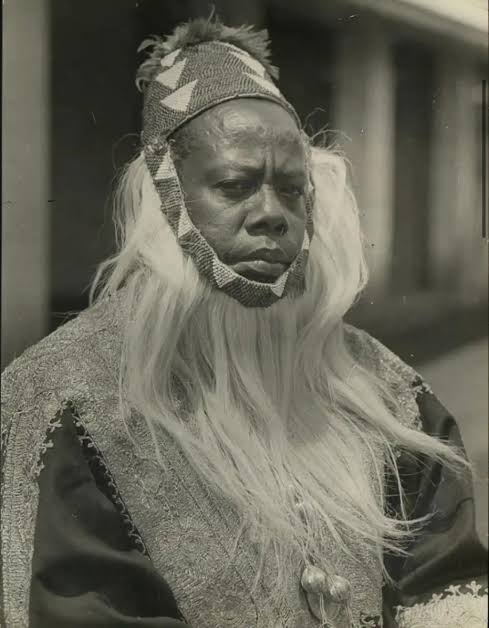
Following the disapearing of Isaza, Kitara empire enters in a major crisis. Bukuku, the gatekeeper of Isaza, took the power, but as he was not from the artistocratic class, his legitimaty was contested. In the same time, the Cwezi clan, leaded by Isimbwa, a son of former king Isaza, immigrate to Kitara, with all their herds. The oral tradition states that Isimbwa arrival was acclamed by the population because Bukuku reign was chaotic. To strenghten his claim to the throne, Isimbwa marry Nyinamwiru and she gave him a son called Ndahura, which will eventually inherit the Cwezi throne.
The Cwezi legacy and innovations
The Cwezi will introduce several innovations into the Kitara culture :
- A new type of cattle, the Inyambo :
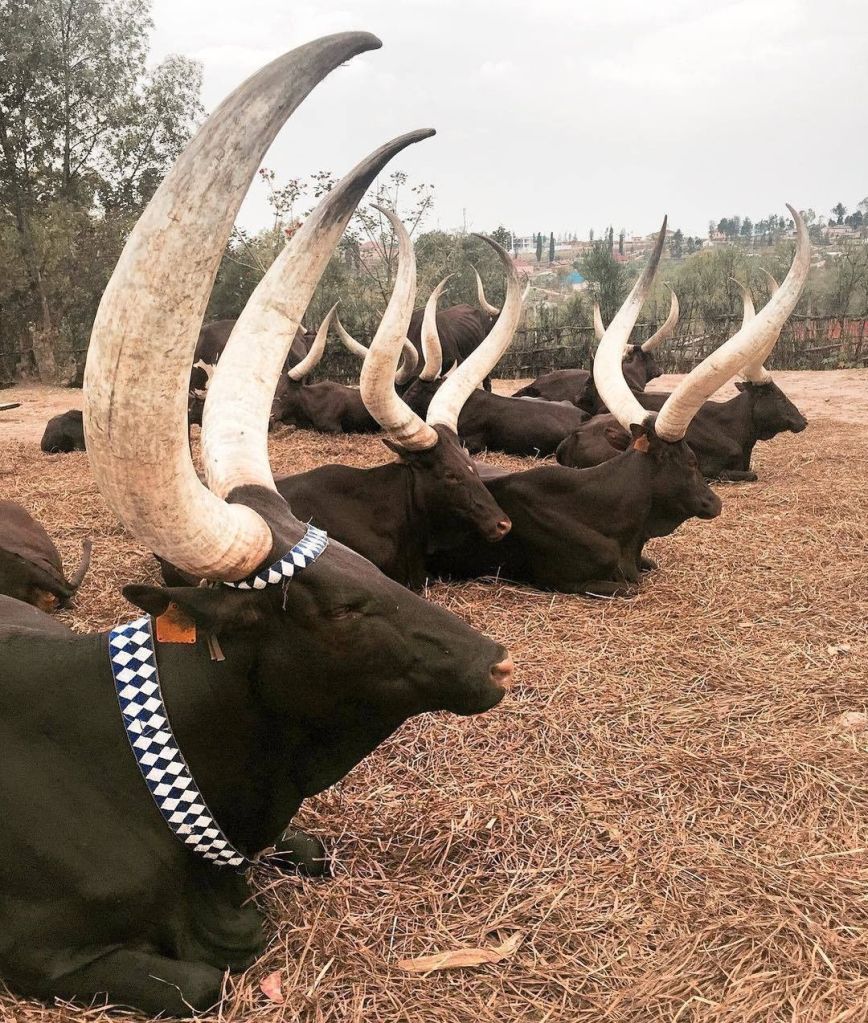
The arrival of Cwezi is associated with the arise of a new type of cattle, called Inymabo. This cattle is characterized by long horns, and a specific brown-reddish colour. These cows will became a great symbol of power and prestige.
- Ubwiru and sacred rituals :
The Cwezi introduced rituals related to the sacred rainmaking kings traditions of the southern regions (present-day Rwanda and Burundi). These kings and their priests had developed highly complex rituals and protocols, which were brought together into a single literary corpus: the Ubwiru, the protocol of the Abiru (royal priests).
These esoteric rituals made it possible to control rainfall, promote good harvests, drive away swarms of insects, prevent and stop epidemics, and so forth. These rainmaking kings were reputed to have almost complete control over nature and ruled over their people in an atmosphere of extreme sacredness. They were subject to strict discipline that restricted their movements, their encounters, and their diet, and they lived in seclusion on their hills. They also bore cyclical royal names.
- An expansionist policy in the region :
The Cwezi pursued, on a much larger scale, the policy of expanding Kitara that had already been initiated by the Tembuzi. This policy of conquest or annexation of territories enabled the royal court to acquire more cattle and more pastureland for them.
It also had the effect of bringing several distant regions of the empire into contact with one another, thereby facilitating the wider dissemination of certain practices and traditions, such as metallurgy and the cultivation of traditional coffee.
- A reorganization of the administration :
As the empire grew larger, several institutions were created to strengthen royal power, such as the Intore, established by Kigeli Mukobanya. This was a kind of academy that trained the finest young men to become the future elite of the kingdom. It was during this period that the corps of Abasizi (poets) was created. They were responsible for recounting the great deeds of the kingdom. It was probably around the same period that the Ubucurabwenge, the royal genealogy, was compiled.
All these new institutions, probably based on pre-existing elements, contributed to the development of a strong royal culture.
It was also during this period that Kigeli Mukobanya introduced an administrative reform aimed at improving the kingdom’s taxation system. The population was divided according to the type of tax they provided to the royal court. Taxes could take several forms: cattle, grain, or even hunting products.
It was this reform that gave rise to a distinction that would have a great impact on the regional history: those who paid their taxes in cattle were distinguished from those who paid them in grain. The former came to be called Tutsi, while the latter were called Hutu.
- The development of a royal cult :
Popular memory has preserved the Cwezi as god-kings, but why is that, and what is the reality behind the myth ? Two factors may explain this belief:
- The sacred royalty and its ceremonial :
The Cwezi kings, probably inspired by the rainmaking kings of Kitara, were sacred kings, believed to be inhabited by divine energy and to be its source for the kingdom. This was reflected in the large number of taboos imposed upon the king, as well as in a strict ceremonial that separated him from ordinary mortals. This reinforced his prestige and created a mystical aura around the person of the king.
- A royal cult:
After the death of a king, a royal cult was devoted to his spirit at the royal court. This royal cult probably spread among the wider population and would later inspire the possession cult of Kubandwa.
- The royal capitals :
The Cwezi will establish royal capitals in several places of the empire. Two sites will have a major importance : Bigo and Ntusi.
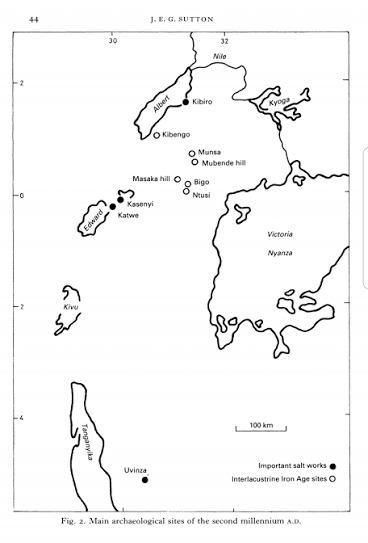
Ntusi and Bigo are the largest royal capitals of the Cwezi dynasty. They consist in an agglomeration of vegetal round huts in the typical style of Kitara region, surrounded by reeds enclosures and earthen mounds and ditches, build to the large amount of cattle present on the site.
These capitals were nomad towns on the same style of Mongols and Turkic nomadic settlements. The royal court was moving according to the cattle needs and the location ressources availabilty. The court occupied a royal capital for several months and then move to another site. This policy to change periodically the royal towns was also a way to manifest the royal power in different parts of the kingdom and loosen the regional particularisms.
Ntusi seems to have been the first site occupied by the dynasty and was probably a site occupied by the Tembuzi dynasty which preceded the Cwezi dynasty, as archaeologic excavation indicate an occupation starting around 1000 AD up to 1500 AD.
Bigo (also called Bigo bya Mugenyi, Mugenyi being a prince of the court) was probably the second most important royal capital of the Cwezi dynasty. This royal town seems to have been inaugurated around 1300 AD. and the last occupation is estimated to be around 1500 AD.
Besides Ntusi and Bigo, other royals capitals have certainly existed, but with less importance and remains than the former.

The collapse of the Cwezi dynasty :
The end of Cwezi dynasty is due to a serie of dramatic events, this period is called in Luo language, « Nyarubanga », meaning – the disaster from God.
- A dynastic crisis : King Ndahura died during one of his military campaign. Following his death, several of Cwezi princes (most of them being his sons) will start a bloody fight to seize the throne. The Empire will enter a severe civil war.
- Epidemics and plague : during one of the military campaign of Ndahura, some of his soldiers came into contact with some epidemics (maybe the great Plague). The epidemics will spread into the whole empire, and have great casualties (both for humans and cattle).
- The arrival of Luo people : On the northern frontier o the Kitara, a clan of Luo origin, the Ababito (Bito) will have skirmishes related to cattle with the Cwezi, which will turn into a complete confrontations.
The collapse of the Cwezi dynasty will usher the emergence of different kingdoms and nations, which still exists in the region :
- Bunyoro, founded by Rukidi, a prince from Bito clan
- Buganda, founded by Kato Kintu (also known as Kimera), twin brother of Rukidi of Bunyoro
- Nkore, founded by Ruhinda, son of Wamara
- Rwanda, founded by Ruganzu Ndori, descendant of Ndahura
- Burundi, founded by Ntare Rushatsi, an ally of Wamara
The last Cwezi king will be Wamara, who will be killed during the civil war between Cwezi factions. However his deeds and the Cwezi dynasty will be remembered through an specific cult present throughout the Kitara region : the Kubandwa.
What are the key takeaways about the Cwezi dynasty ?
The Cwezi were the most famous dynasty ruling the Kitara empire. They were not gods nor supernatural beings, but sacred kings surrounded by complex rituals which grant them mystic aura. Ruling from around 1200 to 1450, they brought several innovations to the Empire (long-horned cattle Inyambo, royal cult and sacred rituals, administrative reforms), and extend the Kitara empire to its largest textent, with an influence covering the whole Great Lakes region. This golden era reach its end around 1450 when dynastic crisis, civil war and plagues occured in conjuction with the arrival of a new clan : the Ababito. Today, several nations and people of Great Lakes area are the heirs of the Cwezi dynasty.
References :
- Abakama ba Bunyoro-Kitara. J.W.Nyakatura. 1933
- Inganji Karinga. Alexis Kagame. 1959


Leave a Reply