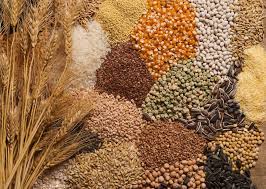
In East Africa, nowadays, religious communities celebrates differents religious days and feast : Christians celebrate Easter, Muslims celebrate the Ramadan, Jewish communities celebrates Pessah. But few generations ago, in the Great Lakes region, there was a major festival whose significance and importance were comparable to those celebrations : the Umuganura, the First Fruits Festival, whose meaning and significance we are now going to explore.
Description
The word Umuganura, or umuganuro, comes from the verb kuganura, which in Kirundi means “to eat the porridge made from the new harvest.” The name of this festival may vary from one region to another, but the nature and content of the celebration are almost identical. It is known as Umuganuro in Burundi, Umuganura in Rwanda, and Ndorerwa ya Mpeshi in Buha, among other names.
Umuganura is first and foremost an agricultural festival celebrating the first fruits of the harvest. However, the religious dimension of the event is paramount: all representatives of the nation—the King, the Queen Mother, great chiefs, priests, subjects, and others—gather together. All clans, all social groups, and the entire population unite in a single collective celebration. Drums, songs, and dances resound, and the people rejoice. Beer flows abundantly, and meat is plentiful. The festivities last several days and provide an opportunity for different segments of society to come together.
Thus, during an Umuganura celebration in Burundi in the 1920s, a European observer estimated the assembled crowd at 20,000 people.
Several people played key roles during the ceremony, notably:
- The King, who presides over and participates in the majority of the rites.
- The Queen Mother, who accompanies the King during the rituals.
- The ritual priests, who prepare and organize the ceremonies (Abiru in Rwanda, Bajiji in Burundi).
- The people, who participate in the rituals and festivities.
History and Origins
The origins of the First Fruits Festival are lost in the mists of time.
We know that sorghum, a cereal widely cultivated in Africa, was already part of African food culture more than 100,000 years ago, based on the discovery of remains of ground sorghum in a Stone Age cave in Zambia. Sorghum appears to have been domesticated around 5000 BCE in what is now Sudan.
As for sorghum cultivation in Kitara, it is estimated to date back to around the 3rd millennium BCE, based on analyses of pollen and grasses from the region.
It can therefore be hypothesized that a primitive form of Umuganura was already being practiced by the earliest farmers approximately 4,000 years ago in the Great Lakes region.
The Course of the Celebration
Because the festival had several variations throughout the region, there was no single standardized sequence of events. Nevertheless, several major features remained consistent.
The celebration took place in several phases which, taken together, lasted several months—approximately ten months in Rwanda.
In Rwanda, Umuganura unfolded as follows:
- The Umurorano ritual, in January, during which a sample of freshly harvested finger millet was brought to the royal court to be used in a fertility ritual, during which the King and Queen Mother prepared and consumed a finger-millet paste.
- The sending of a basket of sorghum to Huro, to the ritual priests, in March.
- The Great Day, in June, with the preparation and consumption of sorghum paste by the King, the Queen Mother, and one of the ritual priests. The sorghum paste was then served to all those taking part in the festival.
In the case of the Burundian festivities, the sequence was as follows, again unfolding over several months:
The Arrival of the Drums
First came the arrival of the drums—the royal drums, symbols of kingship, which were kept and transported by a group of priests to the location of the ceremony, which had been selected beforehand.
The Preparations
The group of priests then began preparing the festival: cooking, provisions, and food.
In particular, they carried out the religious preparations, namely divination sessions intended to ensure that the ceremony and the agricultural year that would follow would be prosperous.
The First Fruits Ceremony
The actual First Fruits ceremony then began. It consisted of a series of rites in which the King played the central role. These rites, both symbolic and mysterious, were intended to ensure the success of the harvest in the coming year.
The Religious Rites
Following these discreet ceremonies came the moment of blessings, pronounced by the King or by certain royal priests.
The Ceremony at Buryenda
Buryenda was the hut assigned to the priestess Mukakaryenda, guardian of the Drum. The King performed the rites together with Mukakaryenda.
The Ritual Hunt
The following phase consisted of the King’s ritual hunt, thereby highlighting the importance of the hunter figure in local traditions.
The Gifts of Livestock, Provisions, and Tools
The next stage involved redistributing food, livestock, and other resources to the assembled people, symbolizing the fertility that had been received and that was being promised for the future.
The Farewell
Finally, once this sequence had been completed, came the King’s and Queen Mother’s farewell. The King and Queen Mother took their leave of the people.
A Trans-African Festival
The First Fruits Festival celebrated in Kitara is not a regional peculiarity. It can be found throughout Africa in different forms.
It is the Yam Festival in the Gulf of Guinea among the Yoruba, Igbo, Akan, and others; the millet festival, known as Goalala, among the Mafa of northern Cameroon; and the First Fruits Festival, Umkhosi Wokweshwama, among the Zulu.
Beyond the African continent, similar festivals can be found in most regions of the world—Asia, Europe, the Americas, and elsewhere—and were practiced by numerous civilizations, including ancient Egypt, Greece, and Rome.
Everywhere, the meaning of the festival is essentially the same: to give thanks for the first fruits of the harvest and to call upon the fertility of the fields, animals, and Nature.
And beyond the African continent, even in the Black communities of the United States, Kwanzaa, a celebration initiated in the 1960s within the context of the Civil Rights Movement, is also a distant heir to African First Fruits festivals such as Umuganura.
Conclusion :
The Umuganura/Umuganuro/Mubande was the central celebration in Kitara, a celebration of life to praise the Divine and the Nature. It was not a memorial for an important figure or a specific historical event, but the celebration of a cosmic reality : the Renewal of the Divine Breath in the Universe. In one place, in one event, in one festival can be summarized a whole civilization. In a word, the Umuganura as the celebration of Life in Kitara.


Leave a Reply